
IS Machine Controls
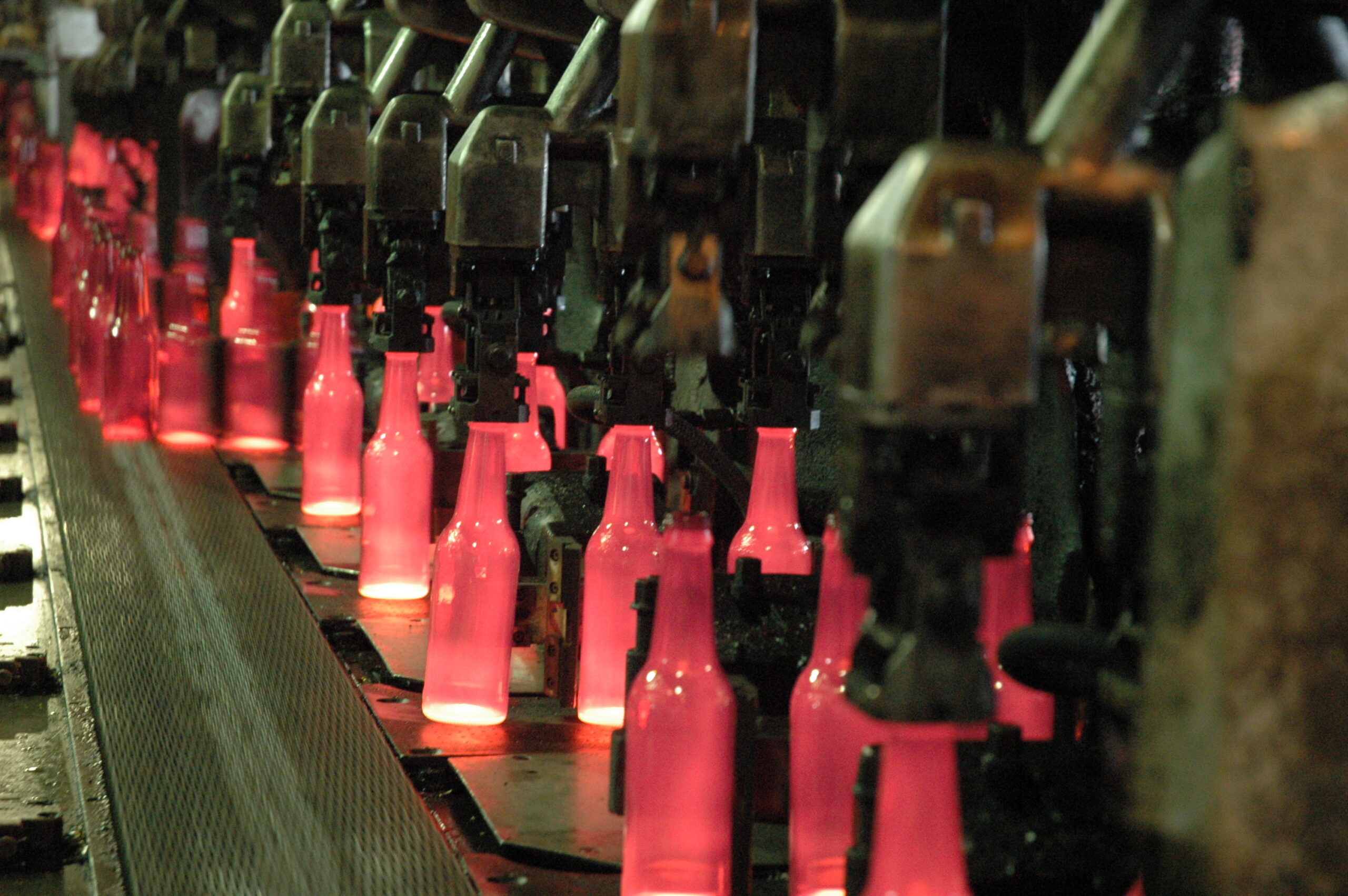
The machine stops for two cycles, then starts running again. Glass is jammed in the sections, and the crew spends the next stretch of the shift clearing it. The first question isn’t how to fix it. It’s which system caused it.
On an IS machine, that question has a real answer. Knowing where one control system ends, and the next begins tells you who to call.
What We Control on an IS Machine
Many IS machines run on two separate control systems. The timing system fires the pneumatic valves that run each section in the machine: closing the blanks, bringing down the baffles, inverting the parison, blowing the container, etc. The drive system runs the upstream equipment that sets the pace for machine timing, and it also runs the downstream equipment to move the ware from the IS Machine to the Lehr. All of which is tightly coordinated with the timing system.
AMS provides the drive system controls. For the feeder, that means controlling the plunger profile and stroke that shape each gob, the tube height that dictates how much glass flows (and so controls the weight of each container), and the tube rotation that helps keep the glass temperature even. It also includes the shear control, whether it runs on a single feeder/shear motor with cams or with separate motors for each, the gob distributor to deliver the gobs to the right section and the right time, and servo takeouts that move the formed containers from the mold to the dead plate more smoothly than can be achieved on pneumatically controlled mechanisms.
Downstream, we control the IS Machine conveyor, the transfer wheel, the cross conveyor, and the servo stacker. For drive upgrades on this equipment, see our glass container automation page.
Drive System or Timing System?
The drive system is the master for IS machine timing. It generates and sends a machine-zero signal followed by one pulse for every shear cut, and the timing system follows it. If the shear pulse is lost, a well-designed timing system cycles out and clears the glass already in the machine and stops cleanly.
That makes some faults easier to place. A machine that stops suddenly with glass still in the sections points to the timing system, not the drive system. A problem isolated to one or two sections also points to timing system or pneumatic issues.
On the drive systems we provide, we support what we have built. When a problem sits in another system, our experience can usually point you to the right area for more detailed troubleshooting.
Who This Is For
IS machine controls are one part of AMS’s glass automation work. We work with container plants running Bucher Emhart, Heye, and Bottero IS machines. Plants typically come to us when a feeder, shear, or conveyor drive is becoming difficult to support, when a fault keeps coming back, or when they want tighter control, or when critical components are obsolete and difficult to support.
How AMS Approaches It
AMS doesn’t rebuild IS machines. We work on the drive systems that run with them, across Rockwell, Siemens, Omron, and Control Techniques platforms, and we’ve been doing this work for over 30 years. Every project follows the same path:
- Assess the machine as it runs. Before we specify anything, we look at how the drive system performs, what your maintenance team can support, and where the problems are versus where they appear to be.
- Scope around production. We plan the work to keep the line running as much as possible; whether that means phased implementation, working within a scheduled rebuild or downtime, or a cutover that doesn’t require an extended down.
- Hand over a system your team can read. Your maintenance team shouldn’t need us to diagnose their own machine. We document the control system so your team can troubleshoot their own equipment, but we are available to call when needed.
Common Questions About IS Machine Controls
A few things customers and engineers typically ask before starting a conversation with us.
Let’s Look at How Your Machine Runs
If a drive is becoming hard to support, a fault keeps coming back, or you’re not sure which system a problem belongs to, we’d like to help.