
Paper Converting Automation Integration
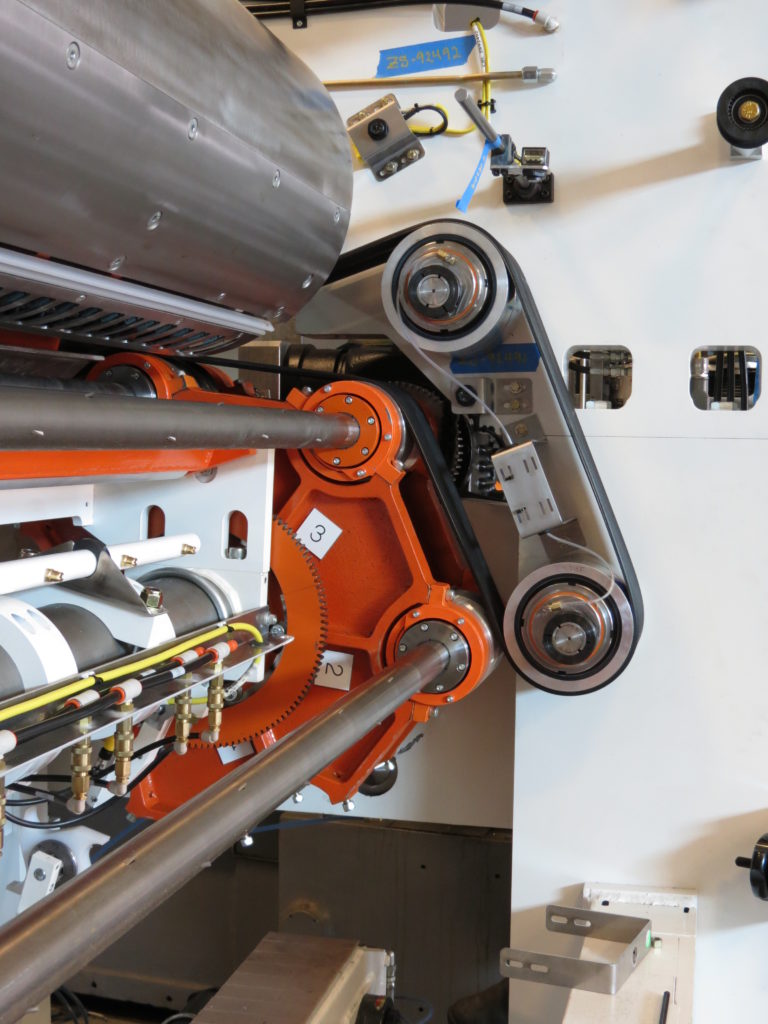
Paper converting production lines are unforgiving: sheet tension disturbances, section coordination issues and winding profile anomalies all translate directly into broke, downtime, and quality rejects. The machines are fast, the tolerances are real, and the operators running them shift in and shift out know exactly when something isn’t right.
AMS is a paper converting automation integrator with deep experience in paper converting machinery safety and performance upgrades. We work on tissue and towel converting lines, board and specialty converting, nonwoven, and flexible packaging. We’ve done paper machine drive systems and winder upgrades at the mill level as well. We’re not a generalist shop that lists the vertical. We know the machines: Surface and Mandrel rewinders, embosser laminators, slitter rewinders, and the requisite level of drive system coordination that keeps them all in sync.
We work equally well with Rockwell/Allen-Bradley, Siemens, and ABB drive systems and control platforms, which matters when you already know what you’re running and need an integrator who knows it too.
What We Do in Paper Converting
The core of our work in this space is drive system and motion control integration with an eye toward improvements in safety, performance, and production flexibility. That’s where the real leverage is in converting. Not just upgrading PLCs or swapping out drives, but rethinking how the machine’s sections are coordinated and controlled.
Winder and Rewinder Drive System Coordination
Winder/Rewinder drive system coordination is where most of our paper converting projects are centered. In a tissue or towel rewinder, the relationship between the unwind, the embosser/laminator, and the rewind section has to be managed precisely. Draw control and tension management between sections, winding profile management, through the full wind cycle from core introduction to finished roll tail-tie, these aren’t problems you solve with off-the-shelf configurations. They require understanding how the machine runs.
Machine Sectionalization
Machine sectionalization is a core part of how we approach upgrades. Where older machines rely on mechanical line shafts, belts, and pulleys to connect machine sections, we replace those mechanical relationships with individual motion-controlled drives, motors and precision drivetrains. The result is better tension management, a more controllable winding profile, and capabilities the machine was never designed for. These include push-button product changeover, variable perforation length, discrete sheet count control, servo core insertion, and software-defined rider roll control. We’ve added capabilities like these to machines built in the 1980s and 90s without removing them from the floor. The results often outshine new machine offerings.
What Sectionalization Delivers
On one tissue mill project, machine sectionalization allowed us to increase the machine’s maximum running speed from 1,500 feet per minute to 2,000 feet per minute, with speed cycling capability up to 2,500 feet per minute mid-wind, slowing only for transfer. This configuration delivered a solid 40%+ throughput increase from a controls and drive system upgrade, not a new machine. Other benefits included vastly improved finish diameter control and elimination of roll “coning” through precise taper tension management during the wind.
Machine Safety and Guarding
Functional machine safety and guarding is also part of every project we do in paper converting. We want to be clear about the distinction: guarding controls access. Functional machine safety controls what the machine is allowed to do when someone is inside that guarding. Both matter, and both are within our realm of expertise and part of our scope.
Legacy Control and Drive System Modernization
Legacy control and drive system modernization is often the entry point. Slitter rewinders and converting lines that are running obsolete PLCs, obsolete drive systems, or both. We do full controls modernizations, sectionalized drive system retrofits, servo upgrades, and new machine integration. This includes custom machine design for applications like core cleaning systems, where no off-the-shelf solution exists.
We most frequently work on paper machine winders, mandrel-style rewinders, and surface wind-style rewinders, across tissue, towel, board, nonwoven, and specialty converting.
Platform Expertise
If you know what platform you’re running, you want an integrator who knows it well. Not one who learned it from the manual. Whether you need an Allen-Bradley integrator for paper converting or experience with Siemens drives, the answer is the same. We work with the platform you already know and optimize it for your production requirements.
Rockwell Automation / Allen-Bradley: Most of our paper converting work runs on Rockwell platforms. We use ControlLogix / CompactLogix with integrated GuardLogix safety, and we have deep experience with regenerative drive system design on these platforms, which matters in converting applications where energy recovery from decelerating sections is part of the system architecture and avoidance of braking resistors in paper dust conditions is desirable.
Siemens: We work extensively with Siemens drive and control platforms and have completed paper machine drive system projects using SINAMICS drives under Rockwell PLCs, including a full AC drive system modernization. Siemens drives are strong in large-horsepower applications, and we’ve designed mixed-platform systems that use Siemens active line modules with Rockwell drives on a common bus.
ABB: We have experience with ABB ACS 880 and DCS 880 drive systems and work with ABB through our regional representative relationships to deploy Paper Machine modernization projects and safety upgrades.
The short version: we are comfortable with being platform agnostic. We follow the customer’s installed base and optimize it for production requirements.
How We Work
Mechanical Engineering First
We start with mechanical engineering before we touch the controls. In drive system work, if the motor selection, drivetrain, and inertia relationships aren’t right for the process you’re trying to run, you can’t fix it downstream in the code. We do a thorough machine dynamic analysis first, understanding the relationship between the motor and the load, the reflected inertia, drivetrain stiffness, the torque requirements across the winding profile, and this foundation is what makes for a stable production machine and equipment that will last.
No Proprietary Retrofit Package
We also don’t have a proprietary rewinder retrofit package. That’s a feature, not a gap. It means we can improve machines from multiple OEM manufacturers and vintages, adding features and capabilities that didn’t exist when the machine was built, without the customer having to buy a new machine. Whether you are running a Perini machine or something from PCMC or a Jagenburg or something from Valmet or Voith, we can bring out the best that is in your existing production equipment with a solution that you can support.
In-House Engineering and Fabrication
Our 50,000 sq ft facility in Vancouver, WA includes mechanical and electrical engineering, fabrication and CNC machine shops, a UL 508A panel shop, and if needed, the crane capacity and floor space to set up and run a machine before it ships. Control system design, panel fabrication, programming, and commissioning all happen under one roof. As a motion control integrator working with paper mills and converting facilities, having all of that under one roof matters on a complex retrofit.
Engineered and built for the operator
We also design for the people who run and maintain the machine, not just for commissioning day. That means HMIs built for operators who need to read at a glance whether something’s wrong, alarm structures and diagnostics that point the maintenance team toward the real problem rather than simply annunciating a fault code, and control software that someone can troubleshoot without needing to call us. We don’t have a field service organization that profits from your downtime. Our focus is designing a system so that you don’t need us at 2 am, but if you do need us at 2am, we are a phone call away.
Industries and Applications
We work across the paper and converting space, with our deepest project history in tissue and towel converting. Facilities we’ve worked in include:
- Tissue mills and tissue converting
- Board mills and corrugated
- Specialty converting
- Nonwoven (wipes, hygiene products)
- Flexible packaging
Key Takeaways
- We know paper converting machines, not just the vertical. AMS works on surface and mandrel rewinders, embosser laminators, and slitter rewinders across tissue, towel, board, and specialty converting.
- The real leverage is how machine sections are coordinated. Replacing mechanical line shafts with individual motion-controlled drives unlocks tension management and winding profile control the original machine was never designed to deliver.
- A controls upgrade can do more than restore performance. On one tissue mill project, machine sectionalization delivered a 40% throughput increase without a new machine.
- We start with mechanical engineering before we touch the controls. If the motor selection, drivetrain, and inertia relationships are not right for the process, you cannot fix it downstream in the code.
- We design so your team can support the system without calling us. HMIs built for operators, diagnostics that point to the real problem, and code your maintenance team can read and understand.
Let’s Talk About Your Machine
Paper converting lines are specific. So are we.
If you’re dealing with a tension problem that keeps coming back, a legacy drive system that’s due for replacement, or a rewinder that needs capabilities it wasn’t designed to deliver, we’d like to understand your production need.