
What Is ITAR Compliance – and Why Does It Matter?
If your company machines parts, writes software, or handles data for a defense contractor, you need partners you can trust to handle export-controlled technical information. ITAR compliance verifies that a vendor has the authorization and infrastructure to do the work. Confirming that before you sign can keep your program from discovering too late that a supplier cannot legally perform the work.
What does ITAR stand for?
ITAR, or the International Traffic in Arms Regulations, governs how companies handle defense-related articles, services, and technical data in the United States. For a factory-automation provider such as AMS, ITAR compliance helps ensure it can support defense manufacturers while appropriately safeguarding controlled technical information and meeting applicable U.S. government requirements.
Why Do You Need ITAR When Working with Certain Customers?
Customers handling sensitive material need confidence that their information will be protected with a high level of care. Working with an ITAR-compliant firm provides that assurance. The company follows strict controls for managing export-controlled technical data. It sets requirements for who can access it.
What Is Involved in ITAR Compliance?
ITAR compliance is not a one-time box to check. It requires an ongoing, documented program for identifying and protecting defense-related articles, services, and technical data that fall under the U.S. Munitions List (USML). This can include manufacturing drawings, automation software, test results, process documentation, and other information used to design, produce, test, maintain, or modify controlled defense articles.
A capable ITAR-compliant firm evaluates the work it performs and the data it receives to determine whether export controls apply. It then establishes controls over where that information is stored and who can access it. That includes how the company shares it, whether through cloud platforms, engineering software, email, test systems, or customer portals. Access to ITAR-controlled technical data by a foreign person can constitute an export and may require authorization from the U.S. Department of State.
Effective compliance also depends on trained personnel, documented procedures, access controls, and regular oversight. In other words, it is more than a written policy. The company must be able to demonstrate that its systems and employees protect controlled information in day-to-day operations. That standard can exceed what many subcontractors are prepared to support. So customers should confirm a prospective vendor’s ITAR capabilities directly rather than assume compliance based on a general claim. The U.S. Department of State’s Directorate of Defense Trade Controls publishes the governing regulations and current guidance.
Is there a way to check ITAR registration before signing a contract?
ITAR is a regulatory framework rather than a certification. As such, there is no universal ITAR logo, badge, or publicly searchable database that confirms a company’s registration status. The U.S. Department of State’s Directorate of Defense Trade Controls (DDTC) manages registration through its DECCS system. Still, registration codes are tied to individual legal entities, and credentials are not published for public review.
The most reliable way to verify a prospective supplier is to ask directly whether its DDTC registration is current and to discuss the controls it uses to protect export-controlled technical data. Depending on the program, customers may also request a current DDTC registration acknowledgment letter or other appropriate documentation. Registration does not, by itself, confirm compliance in every circumstance or authorize every controlled transaction. The supplier must also maintain suitable procedures and obtain any required approvals. AMS lists its ITAR registration under ‘Experience and Capabilities’ on its website, and customers are welcome to call or message us to confirm our status and discuss safeguards for their specific project.
What Does Our ITAR Registration Mean for Your Project?
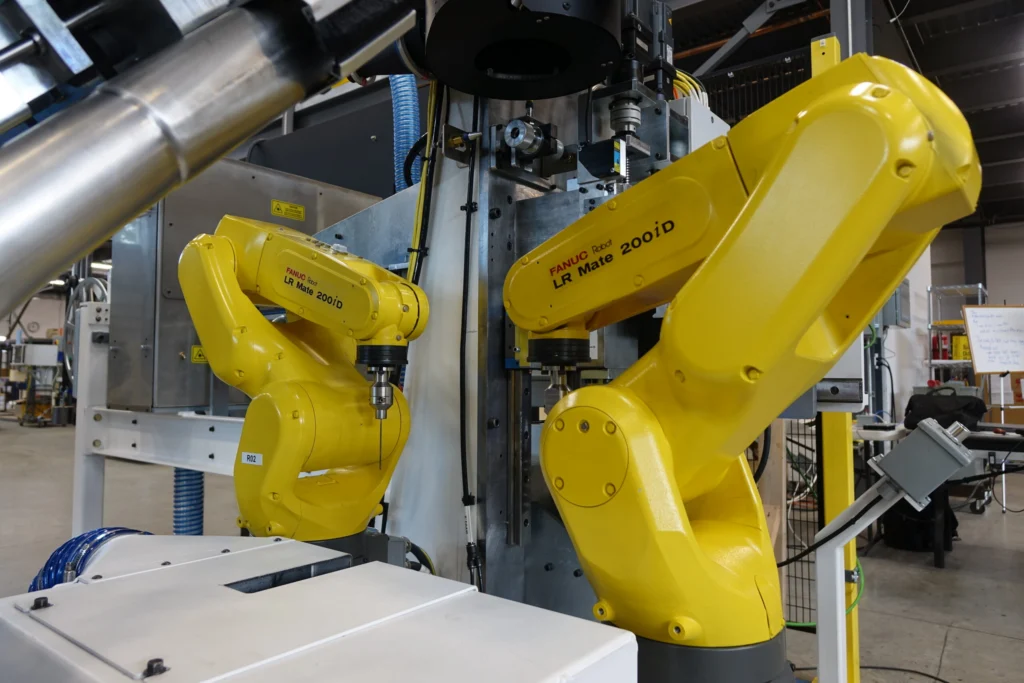
AMS is registered with the U.S. Department of State’s Directorate of Defense Trade Controls (DDTC). That registration enables us to support projects involving export-controlled defense articles, services, and technical data when the work falls within our registration and applicable authorization requirements. Hands-on aerospace manufacturing experience backs that capability, including a lights-out production cell we built for a major aerospace components manufacturer. The system forms one work-hardening sleeve every four seconds and operates unattended around the clock.
If you are a defense contractor, military manufacturer, or aerospace supplier with a project involving controlled technical information, AMS can discuss your automation requirements, data-handling needs, and the safeguards appropriate to the work.
Key Takeaways
- ITAR stands for the International Traffic in Arms Regulations. These U.S. export-control regulations govern certain defense articles, defense services, and related technical data.
- ITAR compliance is not a claim or a logo. It requires ongoing procedures for identifying controlled work and data. That includes limiting and documenting access, training personnel, and managing information transfers.
- The USML, or United States Munitions List, identifies defense articles, defense services, and technical data. Any of it may be subject to ITAR controls.
- ITAR registration is not a blanket authorization to perform every controlled transaction. Companies must evaluate the specific work and obtain any required licenses or other authorizations.
- There is no universal public ITAR certification database. The practical way to evaluate a supplier is to ask about its current registration. Also ask about the controls it uses to protect technical data.
- AMS combines ITAR registration with automation experience in demanding aerospace manufacturing environments. That includes a production cell that forms a work-hardening sleeve every four seconds, unattended.