start the conversation
All of our collaborations begin with an open dialogue.
Get in touch with us using this simple form, and a member of our team will follow up with you soon.
Your contact form has been successfully submitted, and a member of our team will follow up soon. We look forward to continuing the conversation.
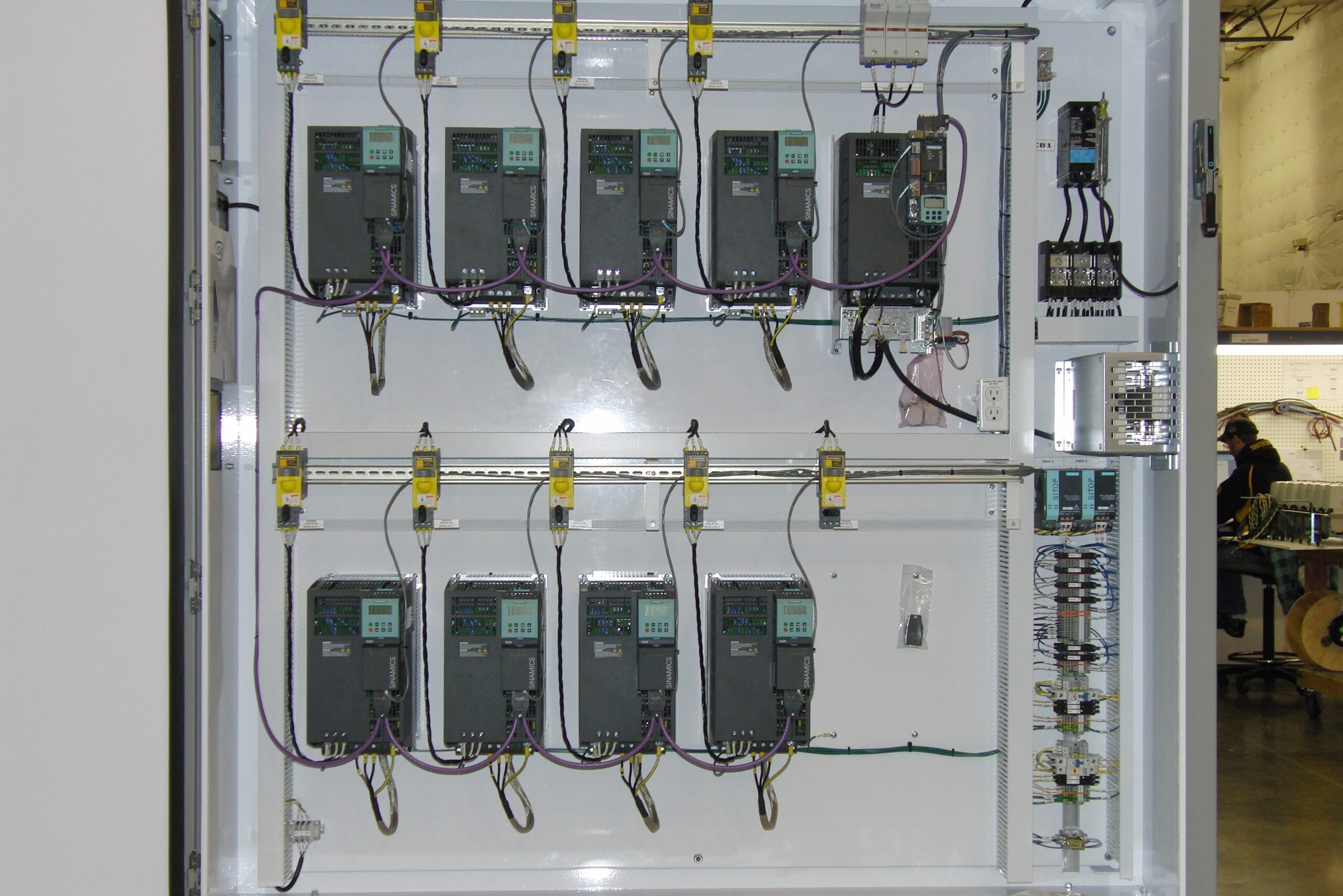
The machines that make your product are often more durable than the systems that run them. Mechanical components such as frames, rolls, conveyors, and tooling are engineered to last for decades. The drives, controllers, and motion systems built to operate them frequently are not. When the electronics that run your equipment reach end of life, the iron itself does not have to go to scrap, and neither does the value it represents.
Aging automation and control systems carry real risk. Obsolete platforms become difficult to support as spare parts disappear from the market and vendor documentation becomes sparse or unavailable. In some cases, the original integrator who built the system is no longer in business, leaving no support path at all. Legacy systems are increasingly difficult to integrate with modern networks, data infrastructure, Industry 4.0 initiatives, or safety standards. And when a drive or controller fails on a production line, the cost of unplanned downtime can quickly exceed what a planned retrofit would have required.
Customers who contact AMS for retrofit work come from different starting points. Some are responding to a failure event: a drive that can no longer be sourced, a controller that has stopped functioning with no replacement path available. Others are getting ahead of a safety audit or a known obsolescence risk. Many need capabilities their current system cannot provide, including better diagnostics, tighter process control, and integration with plant-level systems. In most cases, the underlying equipment is sound. The controls are what need to change.
Most controls integrators approach a retrofit from an electrical perspective, but AMS starts with the mechanical system.
Because AMS has a full mechanical engineering department, we begin every retrofit engagement by understanding the machine itself: the dynamics, the load characteristics, the physical demands the system places on motors, gearboxes, and drives. We perform dynamic analysis to correctly size mechanical and electrical components before anything is specified or installed. This is not a step most integrators take, and it is the difference between a system that works and one that truly performs.
We are motion control engineers first. That shapes how we think about every project, what questions we ask, what we look for in the existing system, and how we engineer the replacement. We ask questions that other firms do not think to ask, because our frame of reference goes deeper than the control cabinet.
AMS provides drive and control system retrofits across a wide range of industrial automation retrofit services and legacy platforms. Our work includes AC and DC drive system retrofits, position, velocity, and torque-based motion control systems, PLC replacement and HMI modernization, network integration, and safety upgrades incorporated into the retrofit scope.
We work across all major control and drive platforms, including Rockwell/Allen-Bradley, Siemens, ABB, Nidec/Control Techniques, and others. The legacy equipment we are most often asked to modernize includes PLC 5, SLC 500, Siemens S5, and proprietary or obsolete motion controllers and drives from a range of manufacturers. We have upgraded equipment of every vintage, from straight relay control to early programmable controllers and first-generation motion systems. If the iron is sound and the machine still makes the product, a retrofit is worth evaluating.
AMS has delivered automation control upgrades and control system retrofits across manufacturing environments ranging from building products and packaging to aerospace and high-tech production.
Where production schedules require it, AMS can structure a retrofit in phases, breaking the work into separate installation and commissioning events to reduce the duration and risk of each individual downtime window. A typical engagement moves through assessment, demolition, installation, commissioning, and optimization. Our approach throughout is to minimize disruption to operations while ensuring the new system is correctly engineered and fully commissioned before we leave the floor.
A well-executed retrofit does more than restore function; it positions equipment to perform at a level the original controls could not achieve. AMS has completed projects where retrofitted systems outperform brand new machines while adding years of dependable service at a fraction of the cost of buying new.
The outcomes vary by project, but the categories of improvement are consistent: improved safety through updated guarding and control architecture, better process throughput, reduced energy consumption from modern drive technology, and significantly improved reliability. Retrofitted systems also gain capabilities the original controls could never provide: real diagnostics, data visibility, Industry 4.0 connectivity, and the ability to integrate with modern plant systems, tools that make it easier for operators and maintenance teams to understand what the equipment is doing and act on it.
Retrofitting preserves the value already in the mechanical asset. Existing equipment is leveraged rather than replaced, the project stays within the existing facility footprint, and the total cost is typically a fraction of the cost of acquiring new capital equipment.
Beyond performance, customers gain something equally important: a system that is fully documented, supportable, and understood. When AMS commissions a retrofit, we deliver complete electrical schematics, mechanical drawings, and an operations manual. The goal is a system your team is not fighting for the next twenty years, one that is built to be maintained, diagnosed, and supported by the people who depend on it every shift.
If your production equipment is running on aging controls, AMS would be glad to assess what a retrofit could deliver for your operation. Automation control retrofits vary widely depending on the equipment, the existing platform, and the requirements of the process. There is rarely a single answer, and the best starting point is a conversation.
All of our collaborations begin with an open dialogue.
Get in touch with us using this simple form, and a member of our team will follow up with you soon.